March 19, 2026: Training 3 (hybrid form)
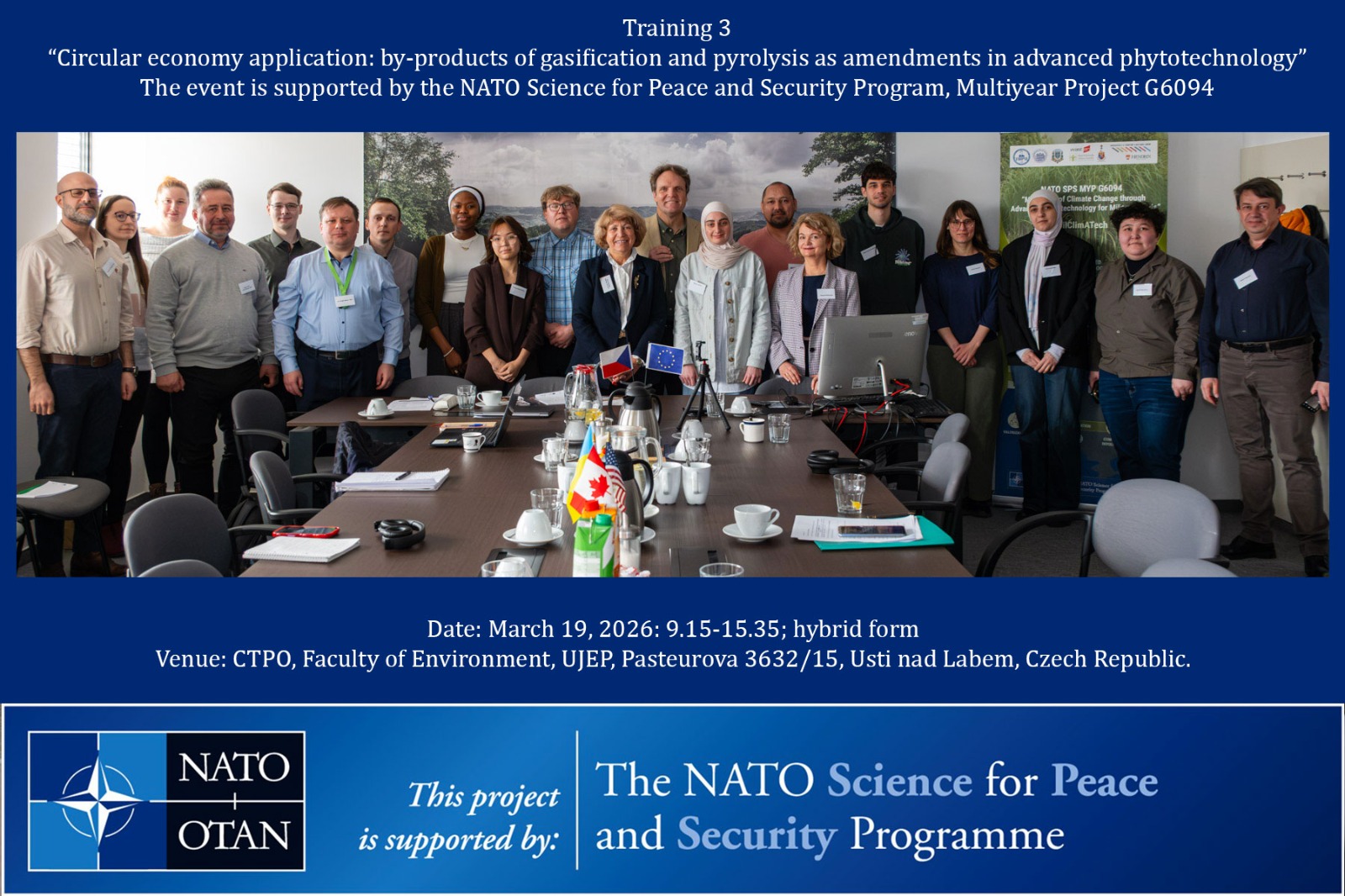
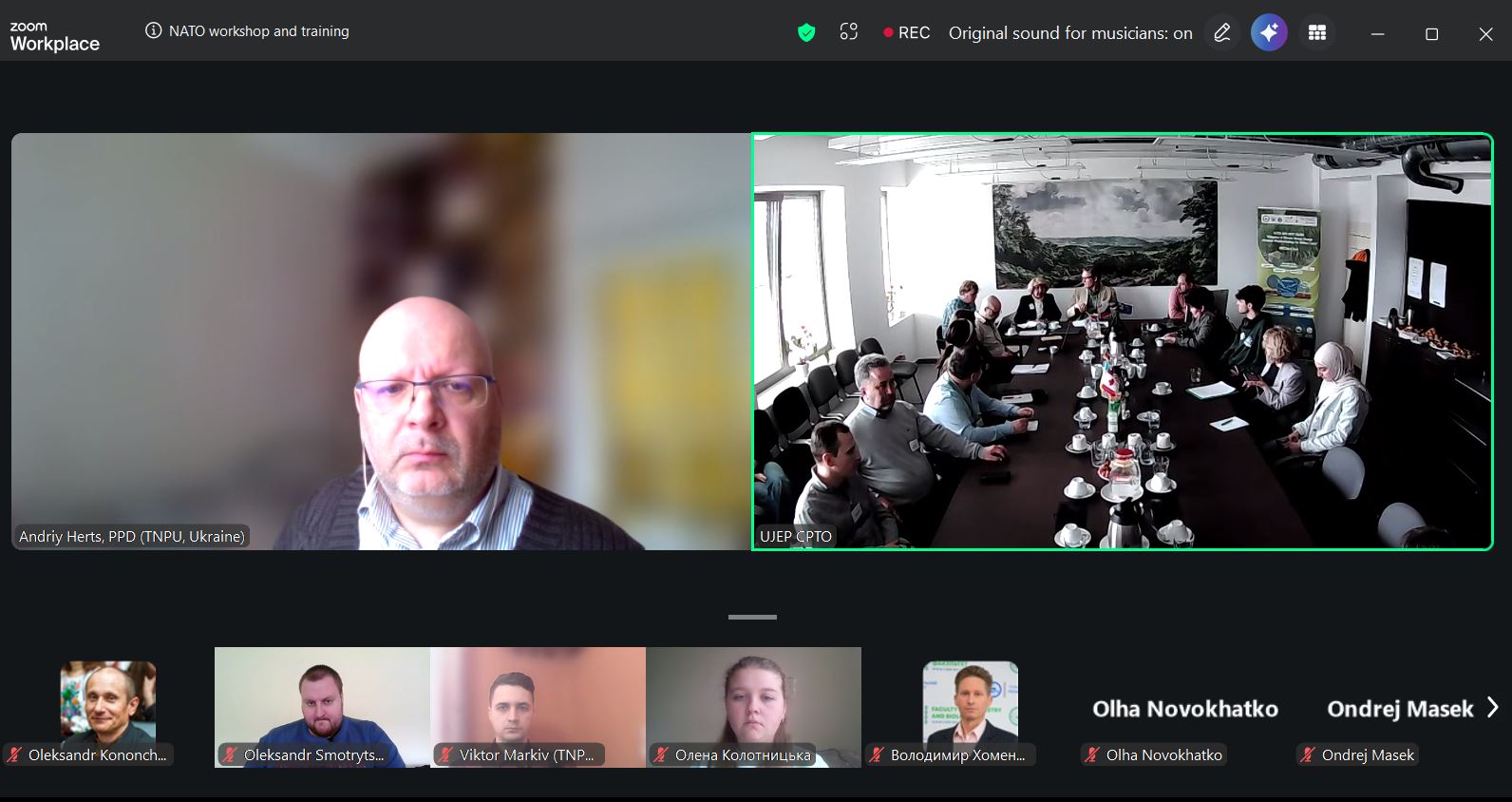
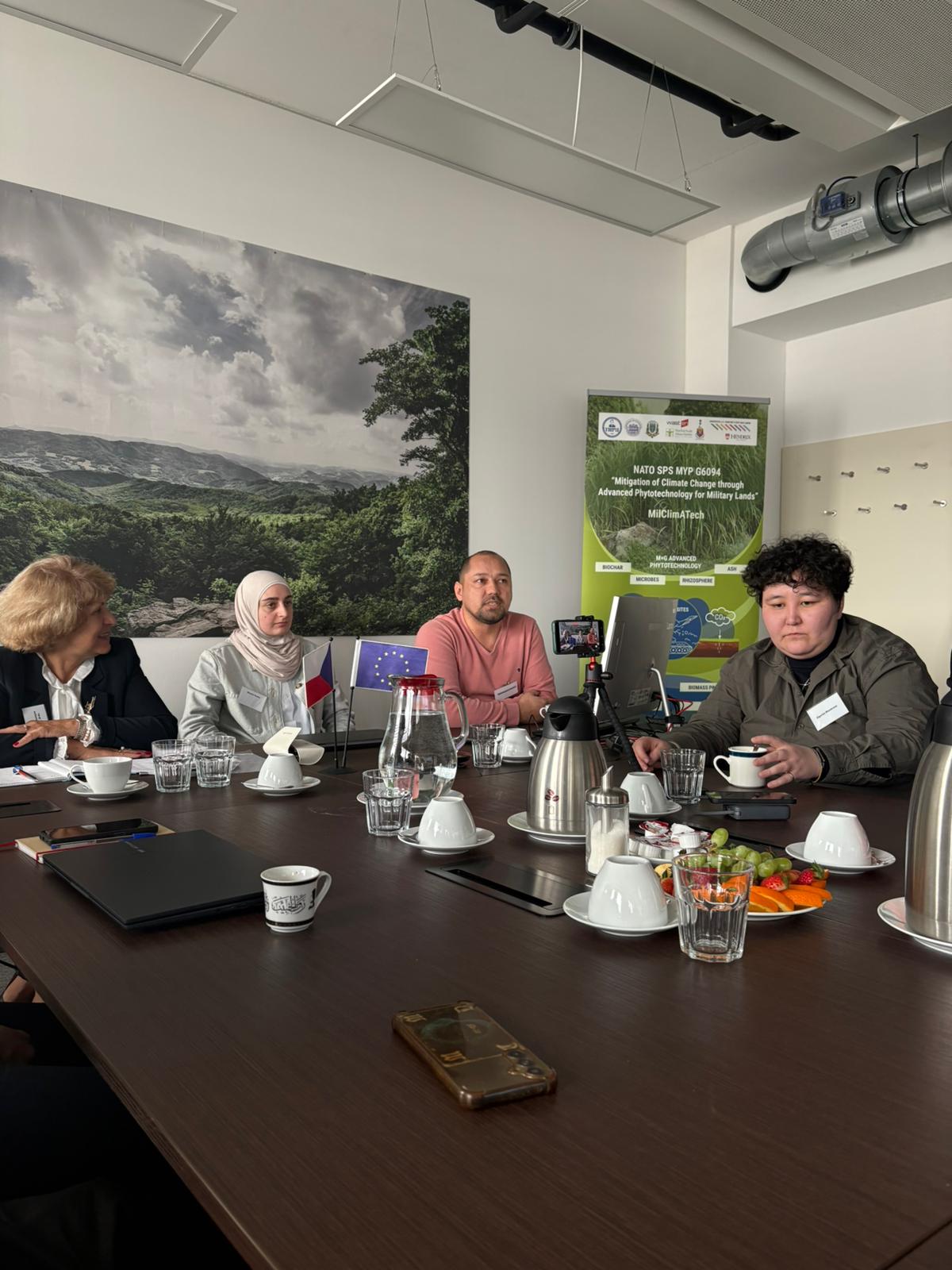
On March 19, 2026, Training 3 entitled “Circular Economy Application: By-products of Gasification and Pyrolysis as Amendments in Advanced Phytotechnology” was held at Jan Evangelista Purkyně University in Ústí nad Labem, Czech Republic, in a hybrid format.
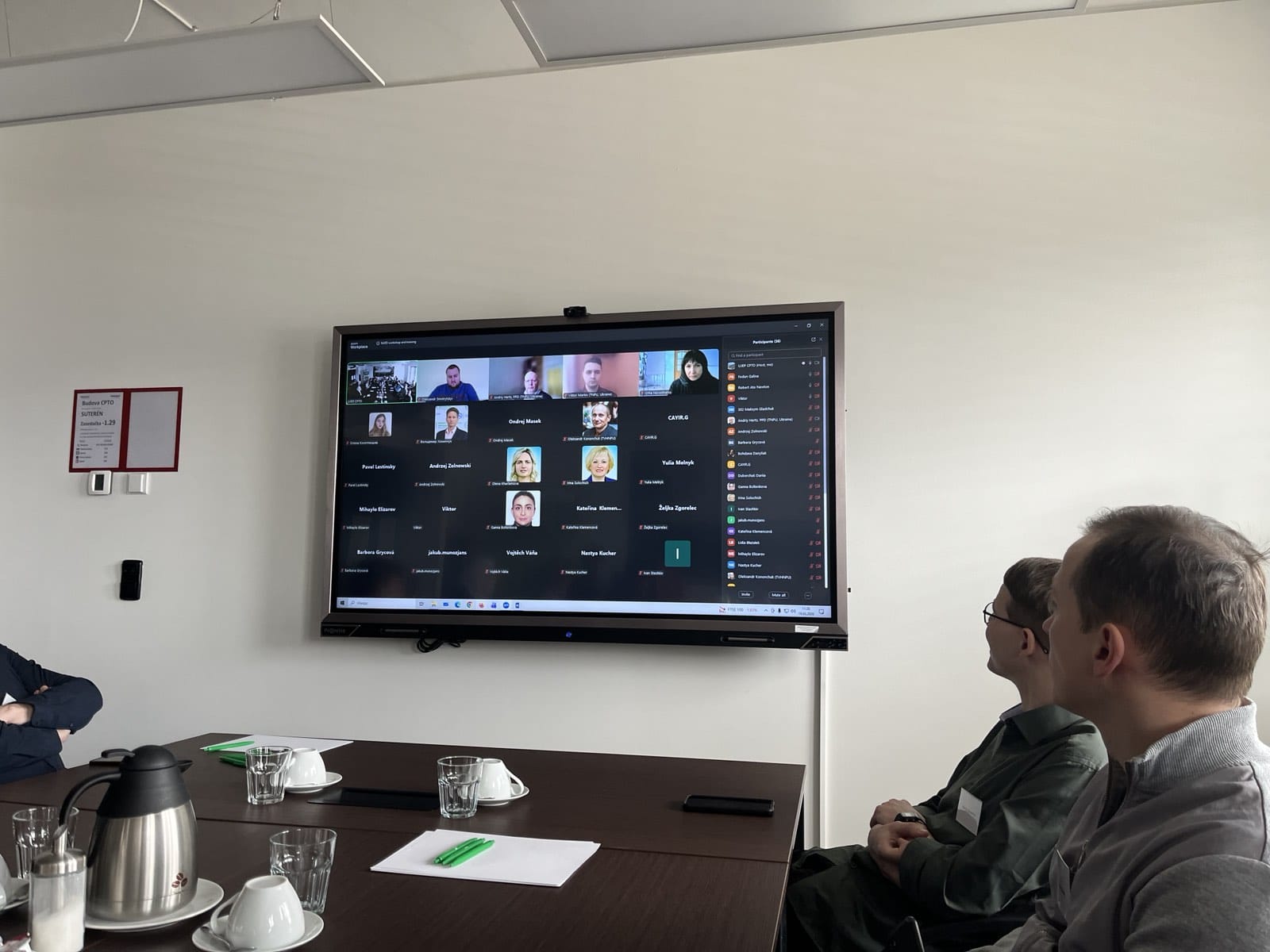
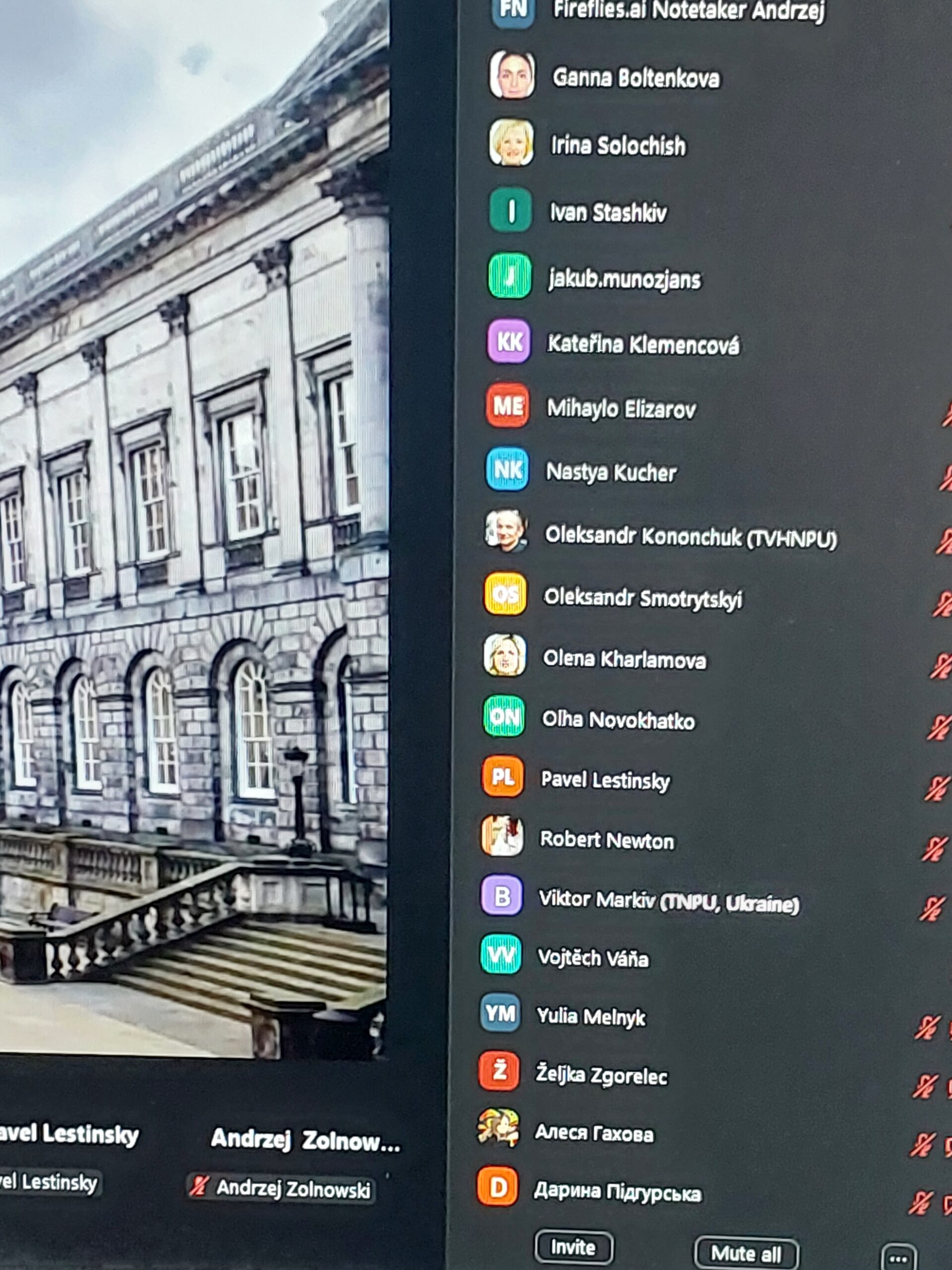
The training introduced advanced approaches to the valorisation of Miscanthus × giganteus (M×g) biomass and its integration into sustainable phytotechnologies. Participants included research teams from Ukraine (TVHNPU, Ternopil; NULP, Lviv; NULES, Kyiv), the Royal Military College of Canada, and UJEP, Czech Republic as well as end users of advanced phytotechnology from the Czech Republic and Ukraine. In total, 19 participants attended in person and 36 participants – online.
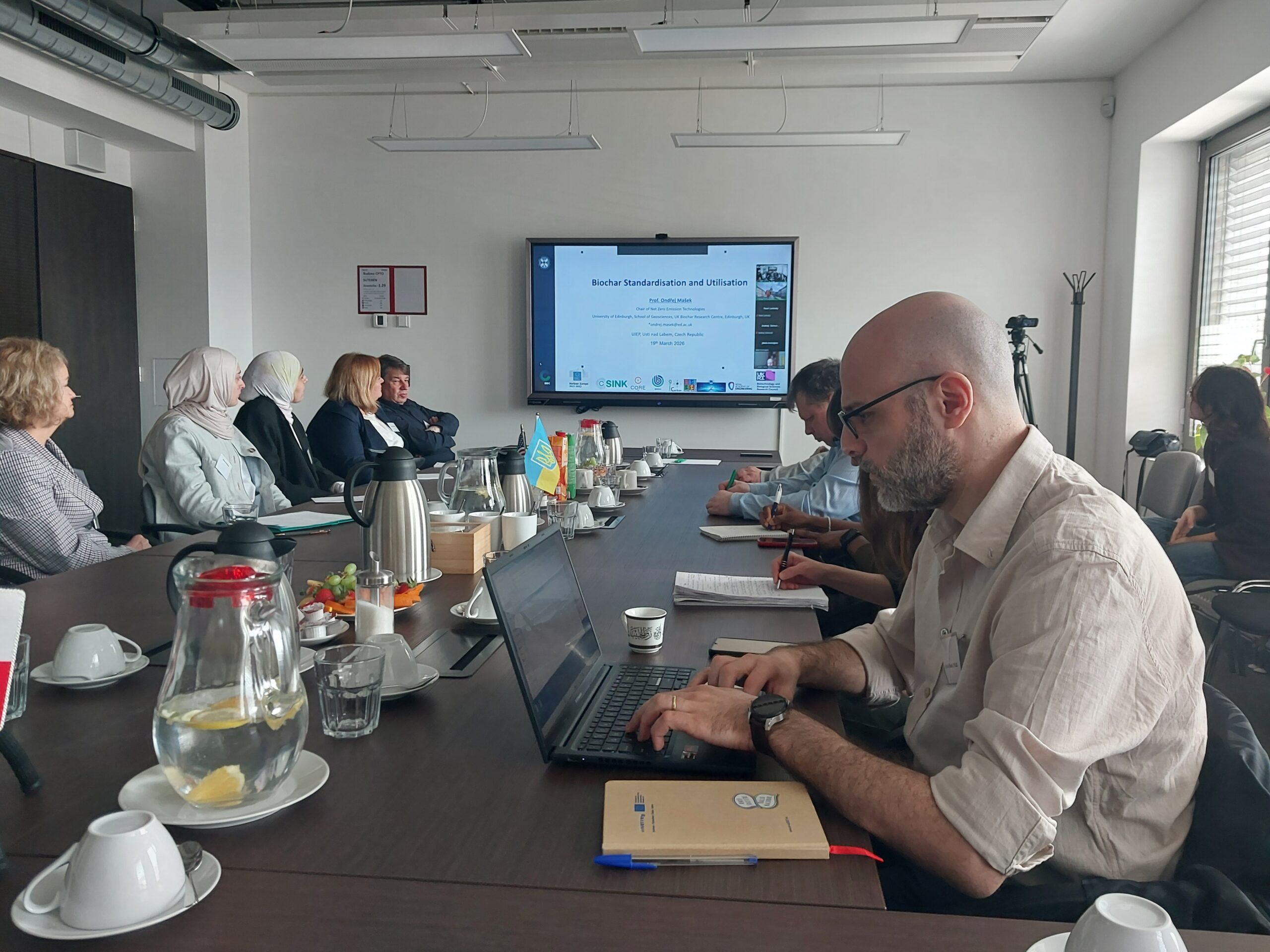
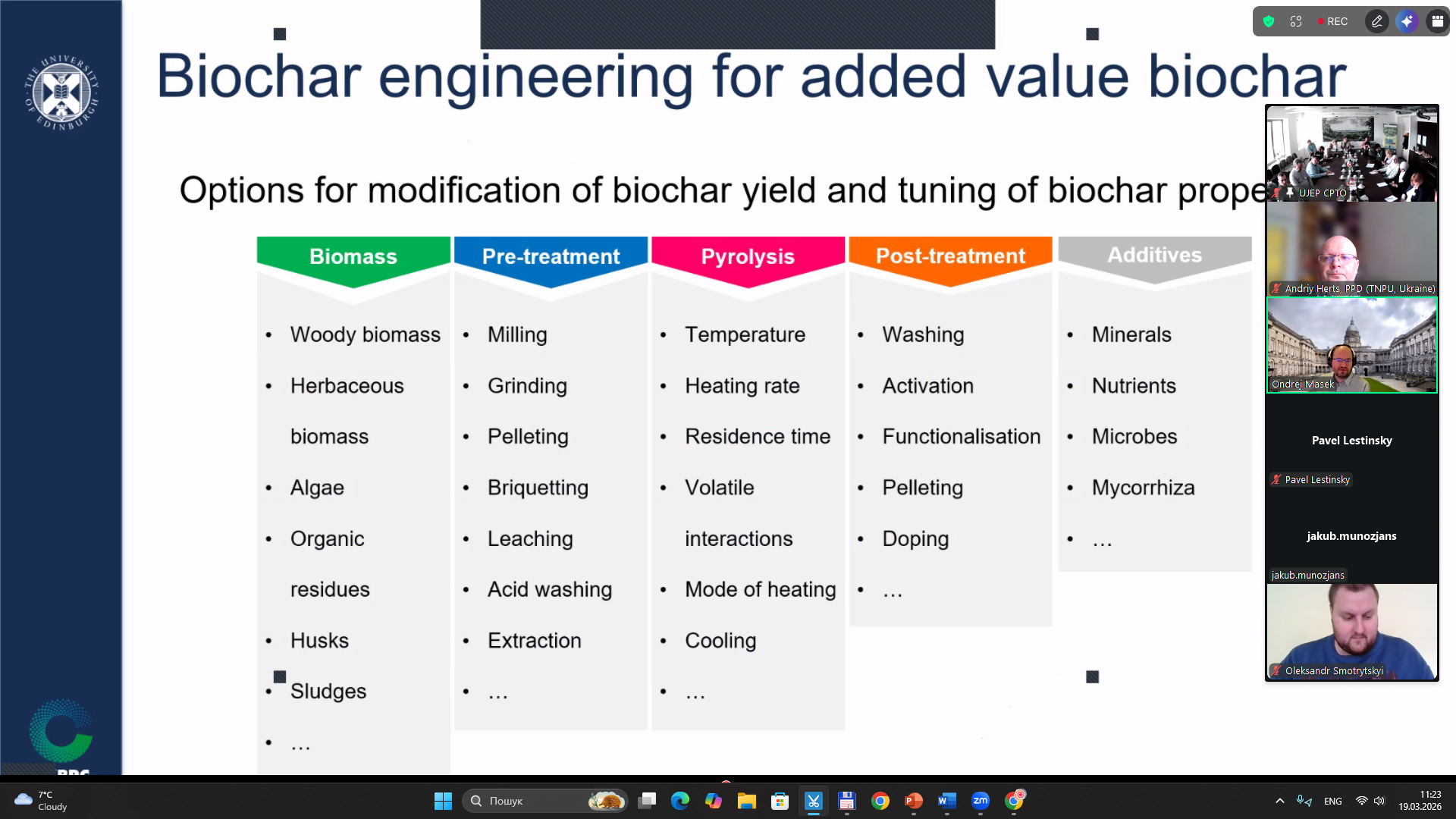
The first session focused on the pyrolysis and gasification of Miscanthus biomass. Key topics included biomass waste conversion, biochar production via pyrolysis, biochar standardization and utilization, and plant-based testing of biochar derived from Miscanthus. Expert contributions were provided by prof. Ondřej Mašek (Chair of Net Zero Emission Technologies and UK Biochar Research Centre, University of Edinburgh, United Kingdom) and Dr. Pavel Leštinský (Institute of Environmental Technology, VSB – Technical University of Ostrava, Czech Republic). Additional presentations were delivered by teams’ members Dr. Andriy Hertz, Dr. Oleksandr Kononchuk, and Mgr. Artem Medkov, focusing on M×g biochar production and plant-based testing.
The second session addressed the application of pyrolysis by-products, particularly biochar and ash, in advanced Miscanthus phytotechnology. Case studies from research sites in Chomutov, Dolyna, and Vorzel were presented. Contributions were made by teams’ members Dr. Tatyana Stefanovska, Dr. Robert Ato Newton, Dr. Vitalii Stadnik, and Dr. Karim Al Souki. Furthermore, UJEP doctoral researchers Abdulmannan Rouhani and Ghazwa Basma presented preliminary results on the application of M×g-based phytotechnology at a brownfield site.
The third session focused on the valorisation of by-products generated during biomass pyrolysis, including biogas, bio-oil, and contaminated biochar. This session was delivered by representatives of the team from Royal Military College of Canada, namely Mariya Marinova and Frank Zeman.
Overall, the training highlighted that biochar production through pyrolysis represents a viable pathway for converting biomass waste into valuable resources, contributing to improved soil quality and sustainable waste management. It also emphasized the importance of biochar standardization and testing to ensure its safe and effective application. The integration of biochar and ash into phytotechnology systems was shown to enhance soil restoration potential, particularly in degraded and contaminated environments. Finally, it was noted that the properties and performance of biochar vary depending on the feedstock, underscoring the need for source-specific evaluation.